

Email Marketing Agency
We build and run the email and SMS system that takes retention from an afterthought to 30 to 40 percent of your revenue.
Ecommerce Email Marketing Agency
CaesarMails is an ecommerce email marketing agency built around a simple operating principle: the people who plan your programme are the same people who execute it and answer for the numbers. There is no strategist who writes a deck and then disappears, and no account manager translating between you and whoever is actually working inside your Klaviyo.
That structure exists because retention is not a campaign, it is a system. Flows, segmentation, sending frequency, deliverability, SMS and offer strategy all move together, and the moment they are split across four teams who each own a slice, the system stops compounding. Every result on this site, more than $30M in attributed email revenue, came out of running all of it as a single programme.
What you get is an email and SMS programme built around how your customers actually behave. Welcome and abandoned cart sequences that recover revenue you are currently losing, post purchase and win back flows that turn one time buyers into repeat customers, and a campaign calendar planned around your margins and your goals rather than a generic send schedule.
Get My Free Audit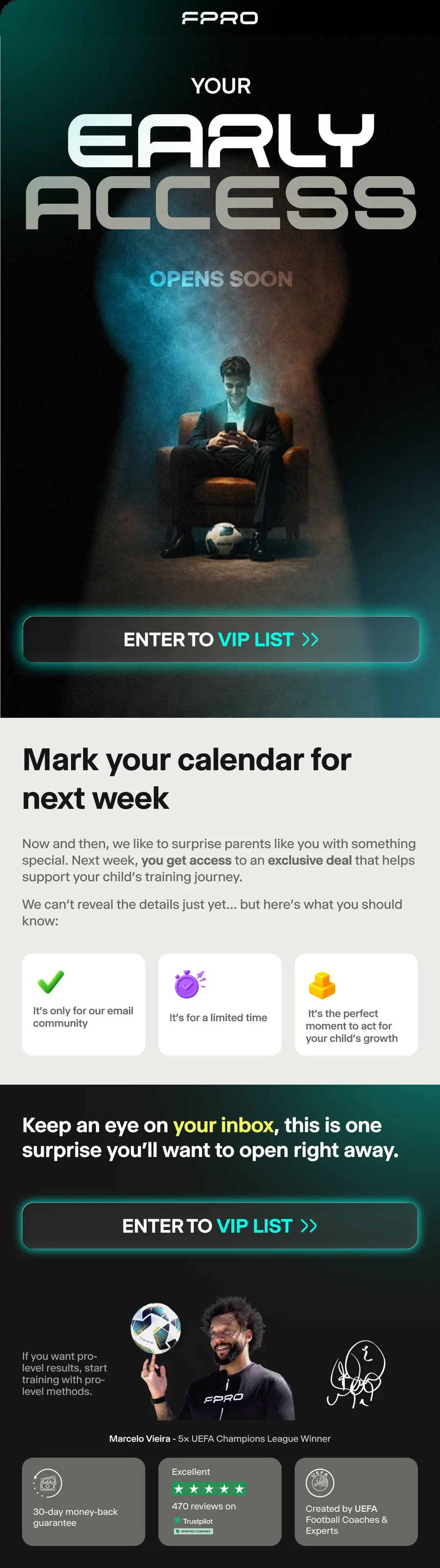
Email Marketing Advertising Agencies
Strategy, copy, segmentation and timing handled together, so every send has a job to do.
Choosing between email marketing advertising agencies is harder than it should be, mostly because so many of them sell the same thing under different names. A lot of what is marketed as email marketing is really just newsletter production: someone sends a branded email once a week, reports the open rate, and calls that retention. It keeps the calendar full and it moves almost nothing on your P&L.
The difference is whether each send has an objective attached to it before it is written. Every campaign we build has one, and the objective decides everything downstream. Promoting a specific product to people who have browsed it is a different email, sent to a different segment, at a different time, than reactivating customers who last bought nine months ago. When those two get the same newsletter, both underperform, and the account looks like it has hit a ceiling when it has simply never been segmented properly.
We bring together the pieces that usually sit with separate people: copy that sounds like your brand rather than a form letter, audience segmentation built on real purchase and engagement behaviour, and the timing that decides when each message lands. Because those decisions get made in the same room, the segment shapes the message and the message shapes the offer, instead of a brief travelling down a chain of people who have never looked at the account.
Everything is measured against revenue rather than vanity metrics. Subject lines, sending times, offer structure and calls to action are tested continuously, at a minimum of two meaningful A/B tests per week focused on lifecycle performance. Open rate is useful as a diagnostic and useless as a goal. The number that matters is what percentage of your total revenue email and SMS are responsible for, and whether that percentage is higher this month than last.
The results of that approach are on the case studies page in full. One brand went from 25.16 percent of revenue attributed to email up to 39.07 percent, with email alone moving from $383,309 to $793,840 a month. Another went from $168,892 to $319,437 in monthly email revenue, an 89 percent increase. A third took email from a standing start to $1,818,924 in a single month, 39.45 percent of total revenue and up 775 percent year over year.
Numbers That Speak for Themselves
Email Marketing Agency for Ecommerce
Retention that raises LTV and repeat purchase rate, not just this month's send volume.
As an email marketing agency for ecommerce, the job is to make email one of the most profitable channels you own. That is a specific claim and worth unpacking, because it is not true of most channels. Paid acquisition gets more expensive as you scale it. Email gets cheaper, because the list compounds and the flows you build this quarter keep earning next year with no additional spend attached to them.
The work covers every stage of the customer journey. Welcome sequences that convert first time visitors while intent is still high. Abandoned cart and browse abandonment flows that recover the revenue currently walking out of your checkout. Post purchase sequences that set up the second order before the first one has even arrived. Win back campaigns for customers who have gone quiet, and replenishment timing for consumables so the reminder lands when the product is actually running out.
All of it is behaviour triggered rather than calendar triggered. A flow that fires because someone abandoned a $400 cart should not look like the one that fires for a $30 cart, and a customer on their fourth order should never receive the same first purchase discount as someone who has never bought. Getting that right is most of the difference between an account at 20 percent attribution and one at 38 percent.
Segmentation is where the majority of the gain usually sits. Most stores we take over are sending close to the same message to their entire list, which quietly trains their best customers to ignore them and pushes their deliverability down at the same time. Splitting the list by purchase history, engagement recency, product affinity and value tier means the volume goes up without the fatigue, because each person receives fewer emails that are more relevant to them.
SMS runs alongside it rather than as a separate programme. Used carefully it is the highest urgency channel you have, which makes it excellent for launches, restocks and closing windows, and terrible for anything routine. Coordinating the two so a customer does not get hit twice with the same message on the same afternoon is a large part of why running both under one roof works better than splitting them between vendors.
A Look At Recent Campaigns
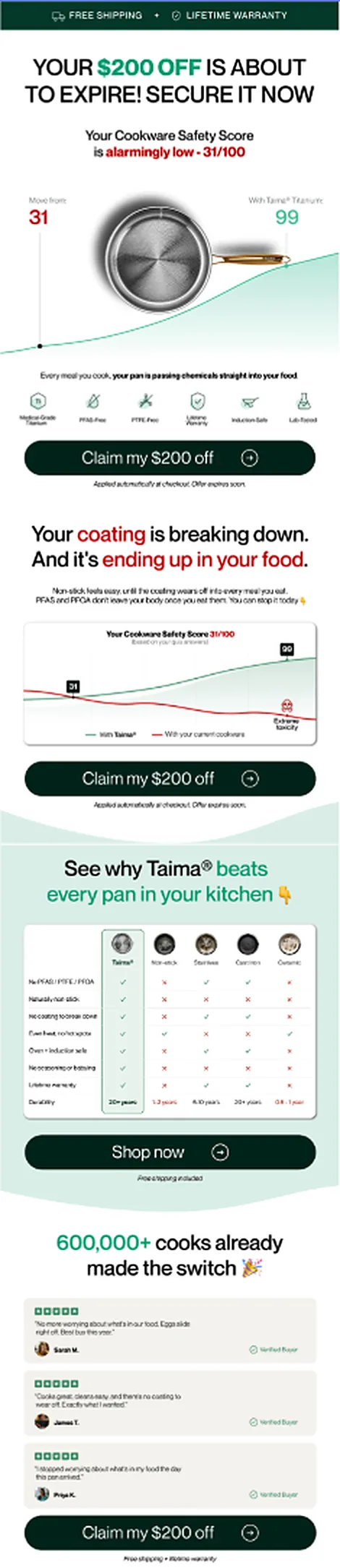
Real sends from live client accounts, not concept work. Every one written, segmented and scheduled against a revenue target.


Email Marketing Automation Agency
The flows that earn while you are asleep, monitored and tuned rather than set and forgotten.
As an email marketing automation agency the goal is straightforward: send the most relevant message to each customer at the moment it is most likely to work, without anyone having to press a button. Automation is what turns email from a channel that costs you time every week into infrastructure that produces revenue continuously.
In practice that means a set of flows covering lead capture, cart recovery, post purchase, replenishment, win back and VIP treatment, each one built against your specific catalogue and margins rather than lifted from a generic playbook. On one account, rebuilding the flow layer took automated revenue from $234,099 to $635,737 a month, and flows went from 61 percent of attributed revenue to 77 percent.
The part most agencies skip is what happens after launch. Automated does not mean finished. Flows decay: offers get stale, products go out of stock, the timing that worked in Q1 stops working in Q4, and a broken conditional split can quietly leak revenue for months before anyone notices. We monitor open, click and conversion rates on every automation and fine tune continuously, running A/B tests inside the flows themselves rather than only on campaigns.
Deliverability sits underneath all of it. There is no point automating anything if it lands in the promotions tab or the spam folder, so sending reputation, list hygiene, authentication and engagement based suppression are managed as part of the work rather than treated as an emergency when something breaks. A clean list that receives relevant mail is the cheapest deliverability strategy there is.
List growth sits alongside it, because automation only compounds if new people keep entering it. Opt in offers, placement and timing are tested and iterated to feed the welcome flow, and the welcome flow is usually the highest converting sequence in the entire account.
Like What You See?
Book a free audit. We will look at your store and show you exactly what your list is leaving on the table, plus what we would do about it in the first 30 days.
Schedule My Free AuditBrands we've helped increase their revenue.
Trusted by leading DTC brands.









Email Marketing Agency FAQs
The questions we get asked most often on audit calls.
What does an email marketing agency do?
Why should I use an email marketing agency instead of doing it in house?
Is email marketing still effective for ecommerce businesses?
How much of my revenue should come from email?
Which platforms do you work with?
How long before I see results?
How does pricing work?
Who actually works on my account?
Book a Call Today
On the call we will look at your store, tell you exactly where your email revenue is leaking, and what we would do about it. If we cannot help, we will tell you that too. Book a free 30-minute call and let's find out if your brand is next.
This is for you if you want:
- A team fully dedicated to your email and SMS growth
- A long-term partner who knows your brand as well as you do
- Results in the first 30 days, and a system that keeps growing after
To qualify, you must:
- Have your brand creative covered in-house or by a freelancer
- Be ready to book a call and get started
Ready to Stop Losing Customers and Start Building a Retention Empire?
Schedule My Free AuditPS. If we do not truly believe we can help you after the audit, we will tell you on the call and we part ways.